
Market Supply
Aluminium Windows for Australia: Cyclone Zones, Salt Air and Wind Load
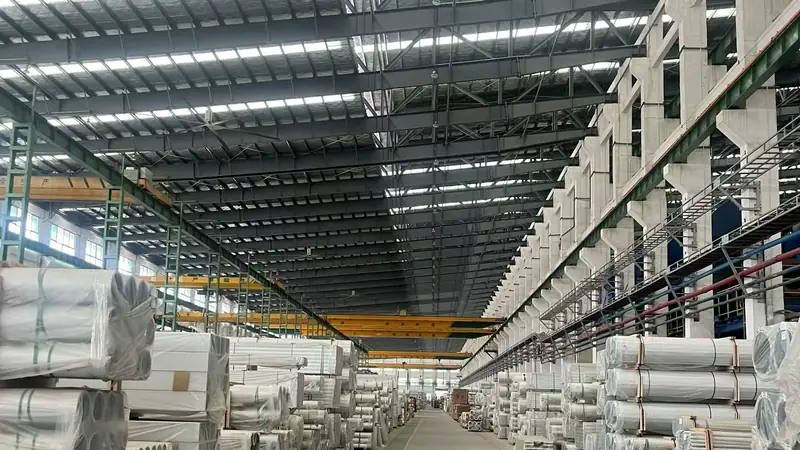
An Australian window schedule starts with a zone class. Coastal and northern sites sit in cyclone areas, where the wind-load test regime under AS 2047 and the glazing classification under AS 1288 set the assembly before any finish is chosen. Adam Alux Systems has extruded aluminium windows and doors since 1997 at three production bases in China, and works from that schedule outward.
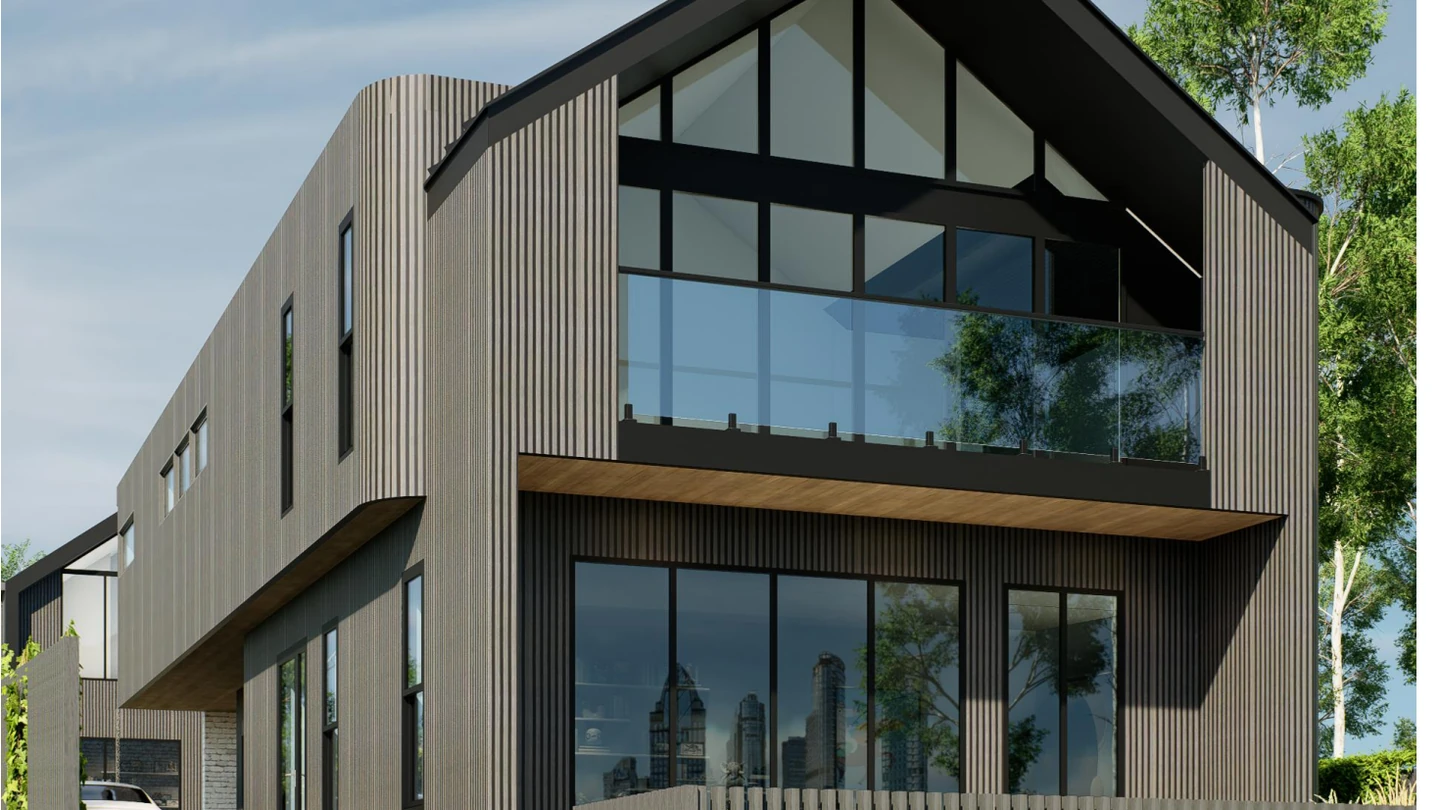
AUSTRALIA · CONTEMPORARY HOUSE
What an Australian schedule checks first
Zone class comes first, because it drives everything downstream. Sites in cyclone areas are assessed against the wind-load test regime under AS 2047, and glazing is classified under AS 1288, so a schedule that names both is asking for a tested assembly. Wall thickness then follows from the pressure: a wind-exposed coastal facade pushes toward a 2.0 mm wall and a thermal break, while a sheltered low-rise job can carry a lighter section. Opening size caps the options too, since a sliding panel has a width past which the answer is more panels.
Adam Alux holds CE attestation to EN 14351-1, certificate no. M.2024.206.C101817, issued by UDEM. Australian zone approval is not held, and the glazing build-up and engineering are confirmed against your project at quotation.
Range fit for Australian opening types
The 112 series thermal break casement window runs five chambers, a polyamide bridge and a 2.0 mm wall on a 5-20 A-5 insulating unit, and it takes the tall single lights on exposed elevations. The 118 series casement window carries the same idea further, with six chambers, a 2.0 mm wall and a 5-27 A-5 insulating unit, drawn for large lights on wind-exposed facades. Where the opening is a door rather than a window, the wide-frame aluminium casement door is a hinged leaf on a wide frame with a double-glazed insulating unit and five catalogue finishes.
A wide horizontal span goes to the 95 series aluminium sliding window, on 2-track or 3-track layouts with ball-bearing rollers. Every series is 6063-T5 primary aluminium, extruded in house, and sash weight, maximum panel width and pressure capacity are quoted against the opening.
Export supply from China to Australian ports
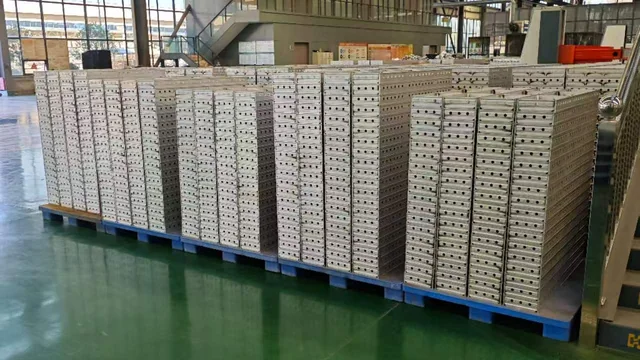
Orders move as export-standard containers, packed for the handling that follows at the port. Each quotation carries a dimensional pack on PDF, with CAD drawings on request, so the schedule can be checked against the extrusion before fabrication starts. A sample profile set and one finished test window or door can be sent ahead of the order, which is how a spec writer settles a section detail without opening the whole job.
Private-label packing and full OEM or ODM supply sit on the same route, so units can arrive under an Australian brand, with profile, finish and hardware matched to the customer's drawing.
Salt air and the finish that answers it
Salt air is the slow problem on coastal work, and it attacks coating edges, cut ends and fixings before it shows on a face. Fluorocarbon is the finish usually written into a coastal specification for that reason. Adam Alux runs it alongside anodised and thermal transfer, with RAL matching and two-tone exterior and interior faces on request. Anodised holds up inland and on sheltered elevations, where the salt load is far lower.
Sealing matters as much as the face coat. EPDM foam gaskets and open drainage run across the window series, and the drainage path is set so water leaves the frame at the bottom rail instead of sitting in it. That detail is what keeps a window working through a wet season.
What to send
Three items get an Australian enquiry quoted. The zone class the project sits in, the opening schedule with widths and heights, and the glazing requirement if the specification already names one. From those the factory quotes the series, the glass build-up, the finish and the packing, and confirms the engineering against the project. Lead times are confirmed with the quotation.
FAQ
Frequently asked
Do Adam Alux windows hold Australian zone approval?
No Australian zone approval or local listing is held. Adam Alux holds CE attestation to EN 14351-1, certificate no. M.2024.206.C101817, issued by UDEM. Where a schedule names AS 2047 or AS 1288, the glazing build-up and engineering are confirmed against your project at quotation.
Which series suits a cyclone-zone opening?
Cyclone-area sites are assessed under the wind-load test regime, so the series follows the opening and the pressure. Tall single lights on exposed elevations go to the 112 or 118 casement, both on a 2.0 mm wall, the 112 on a 5-20 A-5 insulating unit and the 118 on a 5-27 A-5 unit. Wide horizontal spans go to the 95 sliding window.
What glazing comes as standard?
The window range ships with 5-20 A-5 insulating glass as standard, with single or triple builds on request. The 112 runs on a 5-20 A-5 unit and the 118 on a 5-27 A-5 unit, the two deepest casement lines in the range. Glazing build-up and engineering are confirmed against your project at quotation.
What finish suits a coastal site?
Fluorocarbon, because salt air is hard on thin coatings and on cut ends. Adam Alux also runs anodised and thermal transfer, with RAL matching and two-tone exterior and interior faces on request. Anodised suits inland and sheltered elevations where the salt load is low.
Can you supply under an Australian brand?
Yes. OEM and ODM supply includes private-label packing and export-standard containers, so units arrive under the customer's name. Profile, finish and hardware are matched to the drawing, and a sample profile set or a finished test window can be sent before the order is placed.
Product lines
Series configured for Australian projects
Each line below has an Australian page: the same catalogue specification, plus the market section on cyclone-zone glazing, AS 2047 language and the container plan.
Country guides
The market across the Tasman
New Zealand reads as its own schedule: the season, the glass and the way the containers land are all set on its page.
Projects in Australia
villa · day scene
Dark-clad villa, timber slat screens
Dark-clad street villa with timber slat screens and a corner sauna pavilion.
commercial · day scene
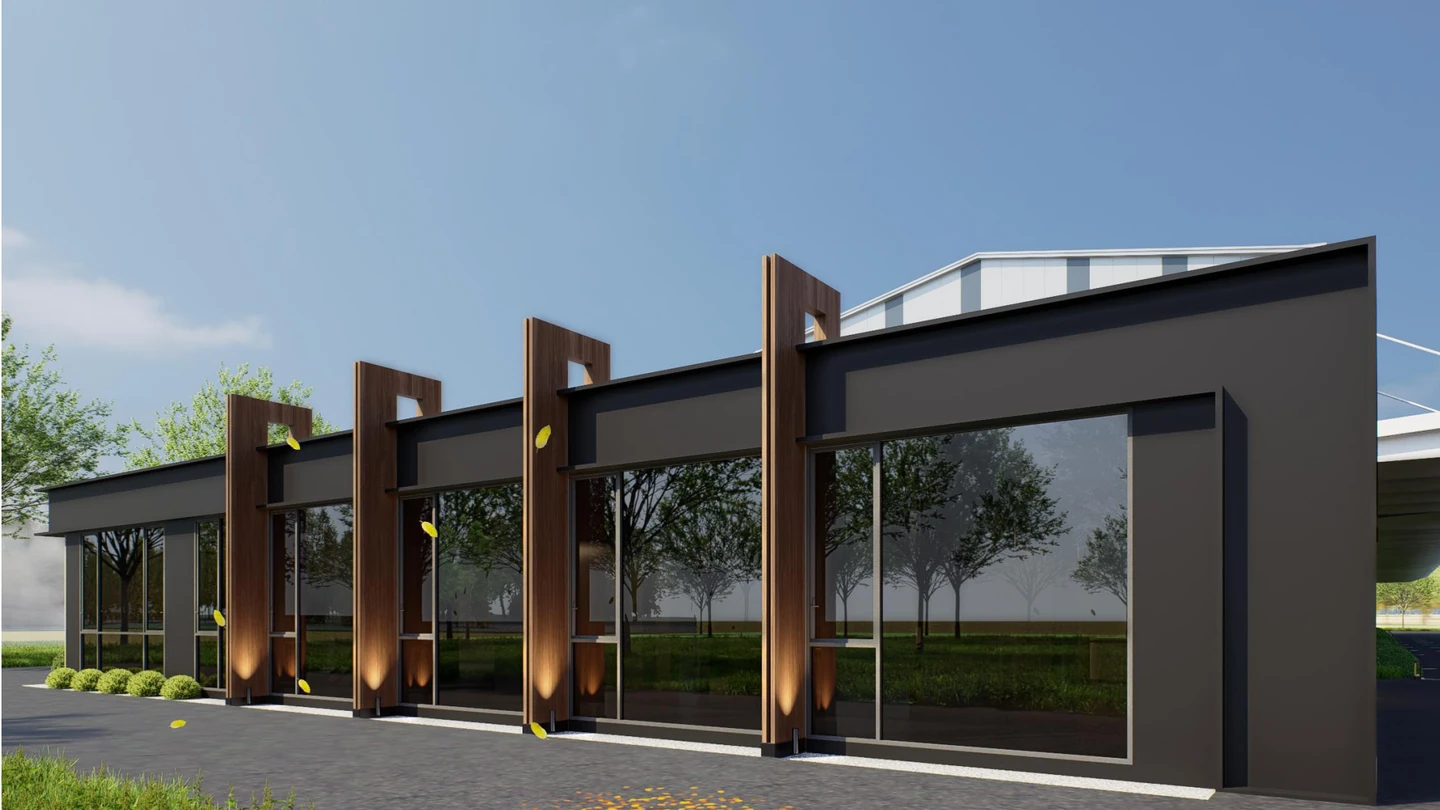
Commercial hall, dark timber
Commercial hall frontage in dark timber with a deep cantilevered canopy.
villa · day scene
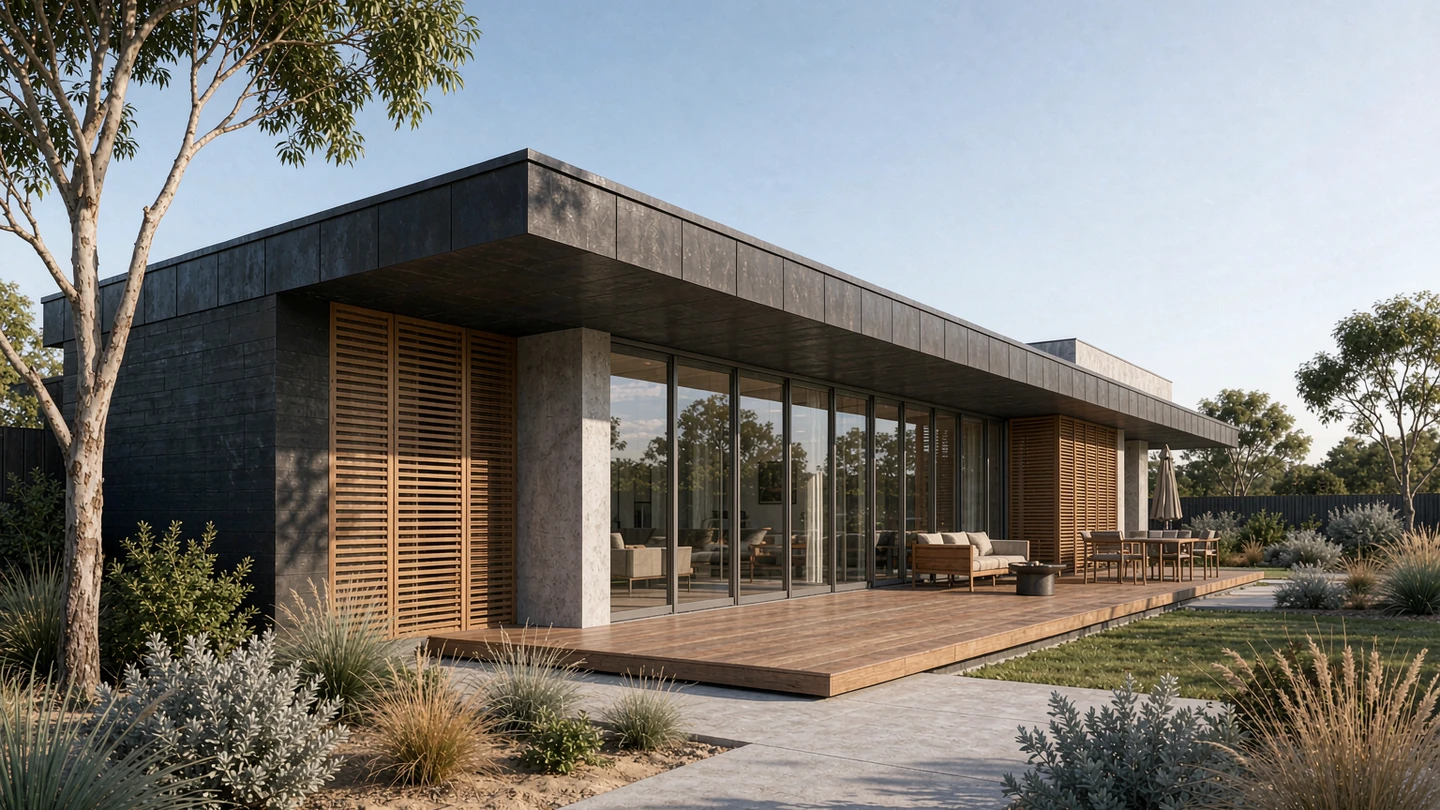
House with deep eave, timber screens
A wide overhanging roof shades sliding doors that open the living area onto a timber deck.
Send your opening schedule
Series, glazing and finish come back as one quotation, with the full dimensional pack on PDF and CAD on request.