
Guides
Cast Aluminium Entrance Doors: A Buyer's Guide
An entrance door takes constant handling and the occasional heavy contact, and the decisions that go wrong on it are usually made before installation, when a leaf is chosen for its face and its build-up is never checked. This guide compares cast and extruded entrance leaves, explains the geometry that decides how a leaf carries load, ranks the cost drivers, and lists the documents to request before you commit to a series.
Cast and extruded leaves come from different production routes
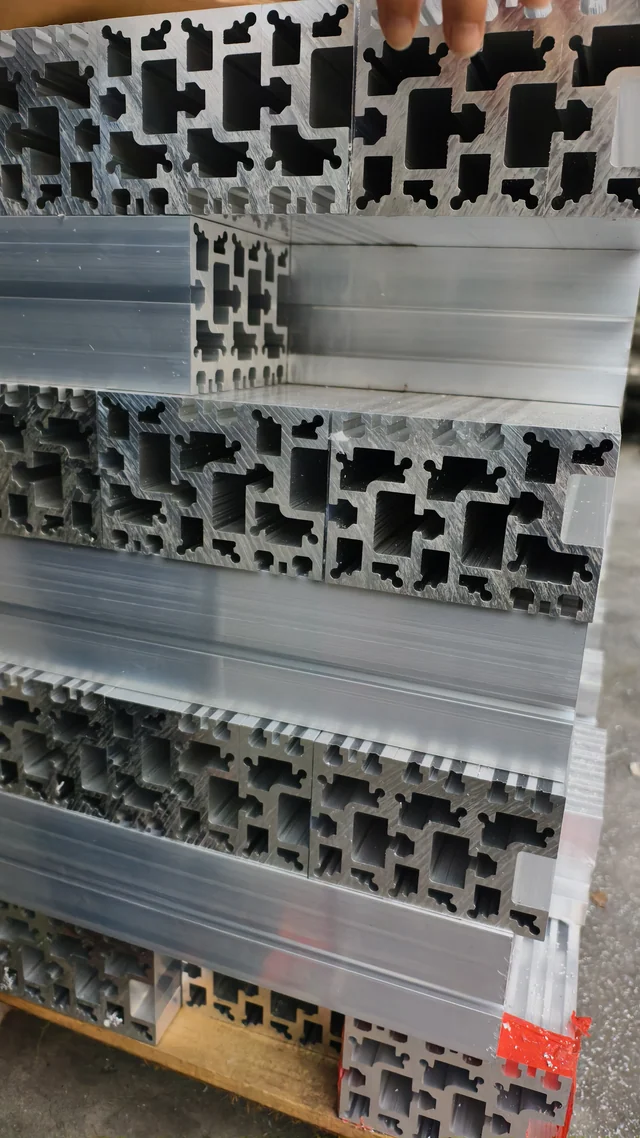
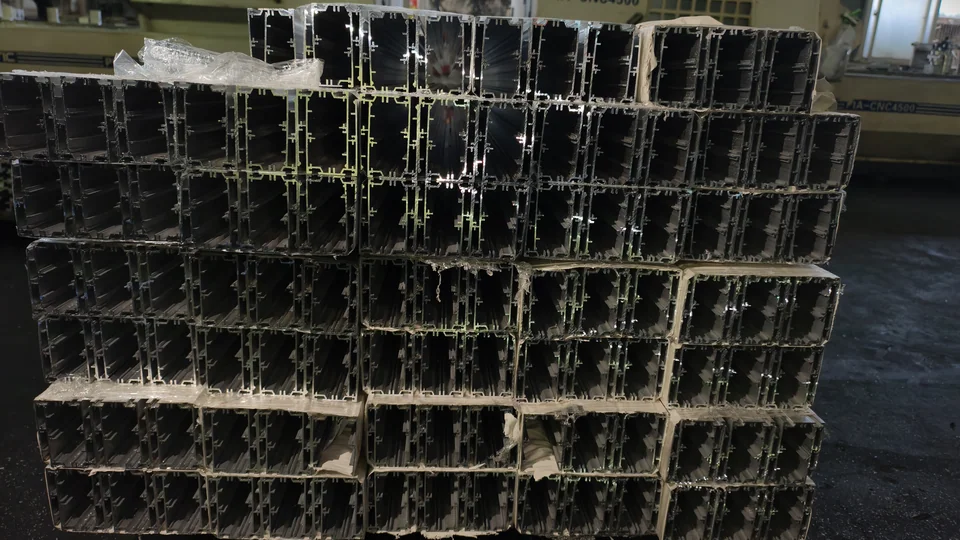
Extrusion pushes aluminium through a die, so the section is identical along the length of the bar. A cast leaf is poured into a mould, so one piece can carry deep relief, undercuts and a wall thickness that varies with the load it has to take. That single difference drives most of the rest. A cast face is one piece, so the entrance reads without a joint line running across it, and the casting can thicken where a hinge or a lock body sits. An extruded leaf holds a consistent wall along its length, which makes the material easy to calculate and the section cheaper to run, and design detail is added by routing, inserting or cladding the face. Both routes are used for entrance doors. The AURORA entrance range covers one-piece cast aluminium leaf faces alongside cast and carved art faces and glass fronts.
Section thickness and the leaf build behind the face
Thickness at the hinge stile and the lock stile decides how the leaf resists racking and how deep a fixing can bite. A cast leaf varies thickness where it is needed. An extruded leaf keeps its wall constant and adds stiffness internally. That internal stack is the part most buyers never see, and it is the part worth asking about. In the AURORA entrance range the leaf is built on a seven-item core: an aviation-grade aluminium panel, a 1.0 mm steel core, B1 flame-retardant boarding, a thermal-break profile, automotive-grade sealing, a PA66 insulation strip and an aluminium back panel. The face is the art, and that core does the structural, thermal and acoustic work behind it.
Joint strategy: hide the line or design it
An entrance carries more joints than a window: leaf to face, leaf to hinge, frame to wall, threshold to sill. Every joint is a place water can enter and movement can show. There are two clean strategies. Hide the joint, which a one-piece cast face and a welded and finished frame corner both do. Or express the joint, using a reveal or a shadow gap as a deliberate line. The joints that fail are the ones that do neither, such as a butt joint between panels of different thickness, or a corner that was ground back and then refinished. Check the frame-to-sash joint too. In the AURORA entrance range it is closed by a multi-layer system with a PA66 insulation strip and automotive-grade sealing, and in the M-24 pivot series four special seal strips close that joint. Ask what protects the bottom rail, because that is where standing water sits.
Sight-lines and the reveal
Set the sight-line from the wall opening before choosing the face. A cast relief face reads on highlight and shadow, so it holds up on a plain wall. A flat face needs a shadow gap or a stepped jamb to read at all, and a wide flat leaf with no reveal can look like a shutter. Depth is the other half of the decision: a cast face, an insulated core and a back panel add up, and the thermal-break frame adds more. A pivot leaf changes the composition, because removing the hinge line lets the closed entrance read as a single panel, while the same build on a hinged frame puts the hinge stile on the elevation. Both are legitimate. The mistake is choosing the face first and then finding that the total leaf build does not sit where the design intended.
Hardware load at the entrance
An entrance leaf is heavier than a window sash, and it gets closed hard. Hinge load follows leaf weight multiplied by the distance from the hinge axis to the centre of gravity, and a slammed leaf adds a dynamic load on top. Leaf width therefore matters more than buyers expect, because a wider leaf increases the weight and the lever arm at the same time. A wide leaf needs a hinge set rated for that combination rather than one hinge set per leaf. Locking follows the same logic: a single latch lets the far stile move, while a multi-point lock ties the leaf to the frame at several points. Where a smart lock replaces the cylinder, confirm the pocket dimensions before the leaf is machined, since that cut-out is fixed in the workshop. The AURORA entrance range takes three catalogued hardware lines: L8 face recognition with an optional palmar vein reader, N6 fingerprint, and the F3 to F6 embedded split lock with a motor-linked secondary leaf.
Cost drivers, ranked
Start with the face production method, because casting tooling and casting labour behave differently from an extruded bar. Next comes leaf mass, which pulls the hinge set, the frame and the freight cost up together. Then the hardware line, where a mechanical lock and a smart entry system sit far apart. Then the finish system, from a single anodised coat to a multi-layer painted or printed finish. Last comes tolerance on the opening, since a cast face rewards a straight reveal and a leaf that has to be scribed to a bad opening costs more to fit. The surprise for most buyers is that the face is rarely the largest item. The frame, hinges and threshold that the leaf mass demands usually carry more of the cost than the face price suggests.
Finishing and how it ages
Casting and extrusion take a finish differently. Anodising follows the metal, so it shows tool marks and die lines, while paint and powder systems level them. Thermal transfer prints a wood-grain or stone effect onto a cured powder coat, which is how an aluminium leaf can carry a timber look. A printed film applied to a flat face conforms easily; a deeply relieved cast face needs a finish that reaches into the detail, so face detail and finish system are chosen together. Adam Alux applies anodised, thermal transfer and fluorocarbon finishes across the range, with RAL matching and two-tone exterior and interior faces on request. Ask for a finished sample of the actual face and colour, because the same RAL reads differently on grained and smooth aluminium.
Failure points and the documents to request
The recurring failures at entrances are hinge sag from an under-rated hinge set, seal and gasket damage at the bottom rail, movement between a cast face and an extruded frame, a threshold that ponds water, a smart lock pocket that does not match the lock body, and a finish that flakes at panel edges. Check for those at delivery: measure both diagonals of the leaf for racking, open and close it in the frame, inspect the seals at head and bottom rail, look at the finish at every corner, and offer the lock body up to its pocket. Before specifying, request the dimensional pack in PDF with CAD on request, the section drawings that show the leaf core build, finish samples, hardware cut-out details, the catalogue performance ratings for the series you selected, and a finished test unit to review. The AURORA entrance range publishes performance on a five-axis catalogue scale: acoustics 5, insulation 8, water tightness 8, air tightness 8 and wind load 9, quoted per series. CE attestation EN 14351-1 is held under no. M.2024.206.C101817.
FAQ
Frequently asked
Is a cast aluminium entrance door stronger than an extruded one?
Not automatically. A cast leaf can thicken locally where the hinges and the lock sit, which helps at the fixing points. An extruded leaf keeps a consistent wall and adds stiffness internally, often through a steel core. Strength comes from the leaf build as a whole, so ask for the section drawing that shows the core instead of judging by the face.
What is inside an AURORA entrance door leaf?
A seven-item core behind the face: an aviation-grade aluminium panel, a 1.0 mm steel core, B1 flame-retardant boarding, a thermal-break profile, automotive-grade sealing, a PA66 insulation strip and an aluminium back panel. The face sits on top of that stack, so the series differ in the face treatment rather than in the core.
What hardware should a wide entrance leaf use?
A hinge set rated for the actual leaf weight and width, since a wider leaf increases both the weight and the lever arm on the hinge. For locking, a multi-point lock ties the leaf to the frame at several points instead of relying on one latch at the far stile. Confirm pocket and cut-out dimensions before the leaf is machined.
What documents should I request before specifying an entrance door?
The dimensional pack in PDF with CAD available on request, section drawings showing the leaf core build, a finished sample in the specified colour and face, the hardware cut-out details, the catalogue performance ratings for the chosen series, and a finished test unit. Those documents answer the questions a photograph cannot, and they travel with the quotation.
Where do entrance doors fail first?
Hinge sag from an under-rated hinge set, and seal damage at the bottom rail where water collects. Movement between a cast face and an extruded frame, a threshold that ponds water and a smart lock pocket that does not match the lock body are the next most common. All of them show up in a five-minute inspection at delivery.
Send your opening schedule
Series, glazing and finish come back as one quotation, with the full dimensional pack on PDF and CAD on request.