
Performance
Security Features of Aluminium Windows and Doors
Security on an aluminium opening is a set of named parts, not a single feature. There is the lock that pulls the sash onto the frame, the frame that holds the glass, the glass itself, and the hardware that carries the leaf across the opening. The Adam Alux range carries all four across the window and door lines, and this page states where each one sits and how it is specified.
Multi-point locking on the casement lines
Every casement line in the range, from the 50 entry window to the 118 flagship, takes a multi-point lock layout as standard. The set pulls the sash onto the EPDM foam gaskets at the head, the foot and the meeting stile, so the sealed line is the locked line. A key handle sits on the sash for the outdoor face, and the hardware schedule, with handle, hinge and lock positions, returns with the dimensional pack on the quotation. Where a project wants a different lock set, the hardware layout is drawn against it.
Frames that hold the glass
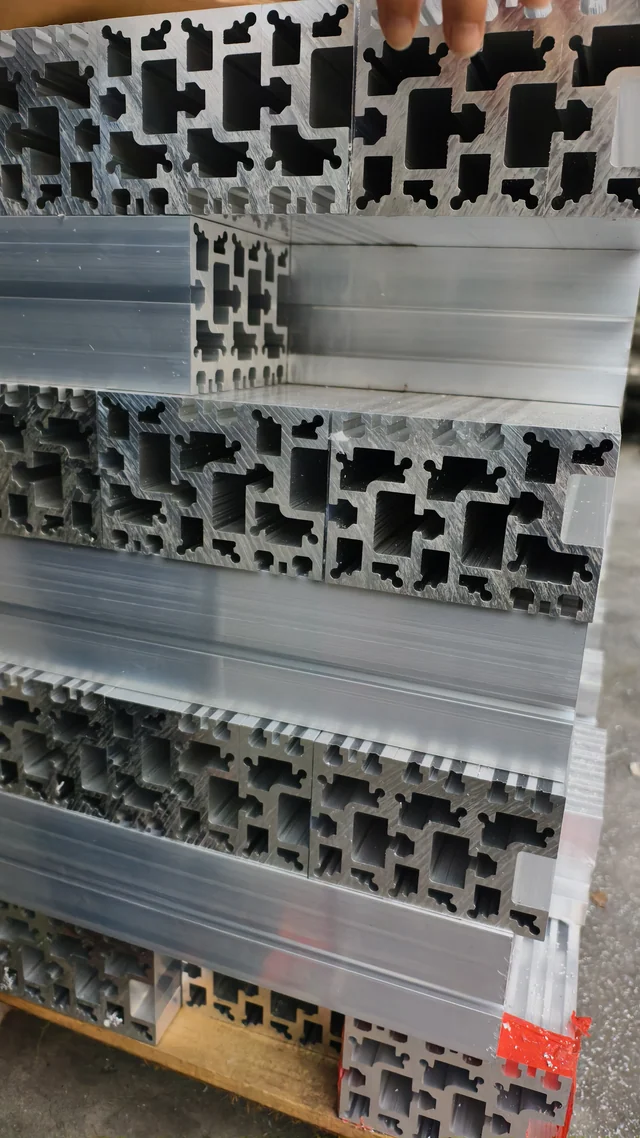
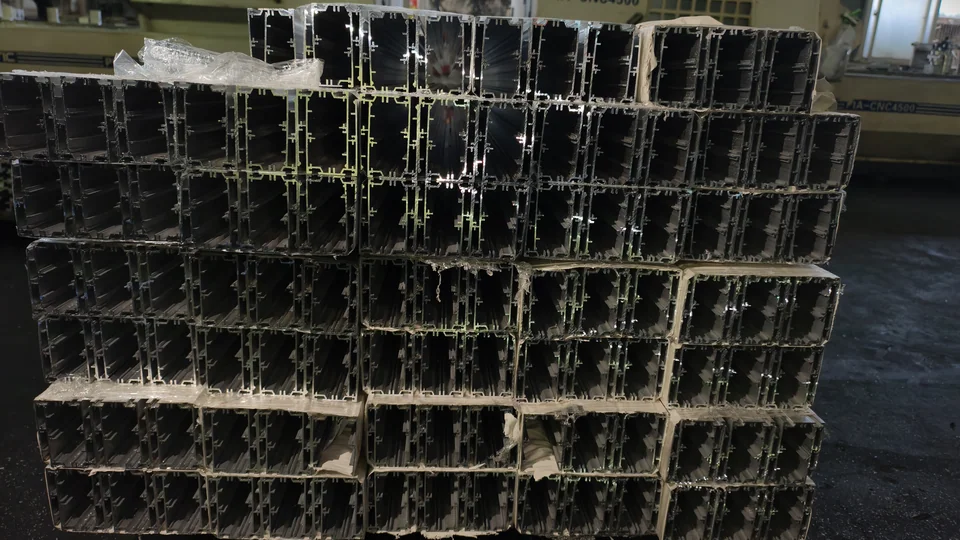
The frame is the first thing a forced entry works against, and the range is drawn for it. Profiles are extruded in 6063-T5 primary aluminium, chosen for strength, hardness and resistance to cracking, and wall thickness runs from 1.2 mm on the 50 casement to 2.0 mm on the 112 and 118. Corners are joined at 45 degrees on the sliding lines, which keeps the outer face clean and the joint straight across the full opening. The sliding sashes are closed-chamber sections, which add stiffness across wide lights.
Glass that stays in place
Automotive-grade tempered glass is fitted as standard in the sliding door sashes. Tempered glass is a heat-treated unit: if it does break, it breaks into small granular pieces rather than long sharp shards, which is the safety reason it is the standard in the sashes. The same unit adds strength to a glazed sash that sits in an exposed opening. Insulating glass build-ups for the windows are quoted per project against the climate and the position, and the glazing bead stays the same across single, double and triple configurations.
Entrance doors on a heavier build
The entrance range is built on the structural list the catalogue prints across the line: aviation-grade aluminium plate, a 1.0 mm steel plate, a B1 flame-retardant board, a thermal-break profile, an automotive-grade sealing strip and an aluminium or wooden backboard. The M-24 off-axis pivot door is listed with six smart entry functions in the catalogue. Lever handle and lock sets are fitted to the casement lines in a finish that matches the frame, and the fire range adds a fire-certified electronic lock to the standard hardware.
Storm markets: impact and cyclone
Two of the destination markets push the security envelope further, and the range meets them at quotation. For the United States, hurricane impact glazing is confirmed against the opening and the zone, and the guide page states what the specification asks for. For Australia, cyclone rated sections are worked against the wind load of the position. In both cases the glass build-up and the fixings are project decisions, and the confirmation returns with the quotation rather than from this page.
Specifying security
Send the opening dimensions, the position on the facade, the destination market and any local requirement the project has to meet. The reply comes back as a series and a configuration: the lock set, the glass build-up, the fixings and the finish, with the dimensional pack on PDF and CAD drawings on request. A sample profile set and a finished test unit are available before a project commits.
FAQ
Frequently asked
Which windows use multi-point locks?
All the casement lines: the 50, the 110 five-chamber and six-chamber, the 112 and the 118. The lock set pulls the sash onto the gaskets at the head, foot and meeting stile, and the hardware layout returns with the dimensional pack.
Is tempered glass standard?
In the sliding door sashes, yes: automotive-grade tempered glass is fitted as standard across the sliding lines. Insulating glass build-ups for the windows are quoted per project against the climate and the position.
What makes the entrance doors harder to force?
The structural list the catalogue prints: aviation-grade aluminium plate, a 1.0 mm steel plate and a B1 flame-retardant board behind the face, with a thermal-break profile and automotive-grade sealing strip in the frame. The build is the same across the entrance range.
Do you supply hurricane impact windows?
Impact glazing for United States openings is confirmed against the opening and the zone at quotation. The guide page sets out what the specification asks for, and the glass build-up and fixings come back with the quotation.
Can smart entry hardware be fitted?
The M-24 pivot door is listed with six smart entry functions in the catalogue, and the fire range carries a fire-certified electronic lock as standard. Hardware beyond the catalogue list is confirmed with the quotation.
How do we check the hardware before ordering?
The hardware layout, with handle, hinge and lock positions, is part of the dimensional pack that returns with the quotation. A finished test unit is available on request before a project commits.
Send your opening schedule
Series, glazing and finish come back as one quotation, with the full dimensional pack on PDF and CAD on request.